Dylan Walker heads out into the unknown!
E-mail:

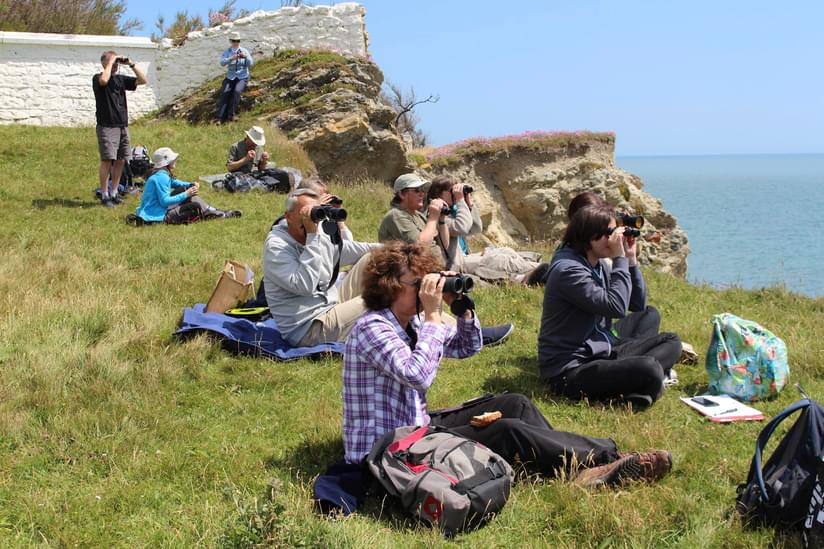
Nobody else could see the eight Bottlenose Dolphins, but then why should they? My partner, Lisa, and I, were sitting in the heart of Lima’s trendy Miraflores District. To our left a group of Peruvians were laughing over their business lunch, whilst to our right, two German tourists gobbled up their hamburgers. Despite the splendid views of the bay from the Café’s veranda, binoculars were required to uncover some of its unexpected natural highlights. Sooty black Inca Terns patrolled the beach far below, Peruvian Boobies were dive-bombing into wave troughs further offshore, whilst a squadron of Peruvian Pelicans took flight in unison.

Just a few breaking waves beyond the surfers, the dolphins, which included several youngsters, were relaxing at the surface. My first thought whilst watching this scene, was how amazing it was that so much marine life could go unnoticed in the heart of Peru’s capital city. How rich in life these waters appeared, and yet how little-known they were. Gazing off into the distance, I wondered what mysterious creatures could be found offshore. The next day I hoped to find out.

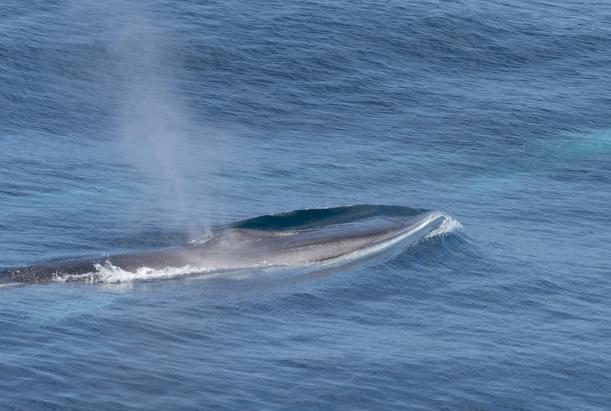
It was 5.30 AM when we arrived at the yacht club in Callao District, to meet our guide, and General Director of Kolibri Expeditions, Gunnar Engblom. Gunnar has been pioneering seabird and cetacean watching pelagics off the coast of Lima since 2001, and now operates them once a month. Heading due west into waters in excess of 1,000m along the shelf-break, Gunnar and his colleagues have found that the cold, northward-flowing Humbolt Current here is home to an incredible diversity and density of seabirds, as well as a wide range of cetacean species, including Blue and Sei Whales, Dusky, Common, Bottlenose And Risso’s Dolphins, and Burmeister’s Porpoise.

ORCA Peru Survey

As we headed out of the harbour at dawn, I began to fill out my ORCA survey forms with the help of the boat’ GPS. Nobody was surprised to see the thin mist that besieges Lima for six months of the year. Still, visibility was surprisingly good, and as we settled down to take in the warm sea air, Gunnar was already calling out the first seabirds of the day. A Grey Gull flew overhead, a Humbolt Penguin lingered close to shore, and then a tiny Guillemot-like bird scampered away from the bow. It was a Peruvian Diving Petrel, one of the specialities of the region and a “must see” for the birders taking the trip from as far afield as the USA, France, UK, the Dominican Republic, and Kenya.

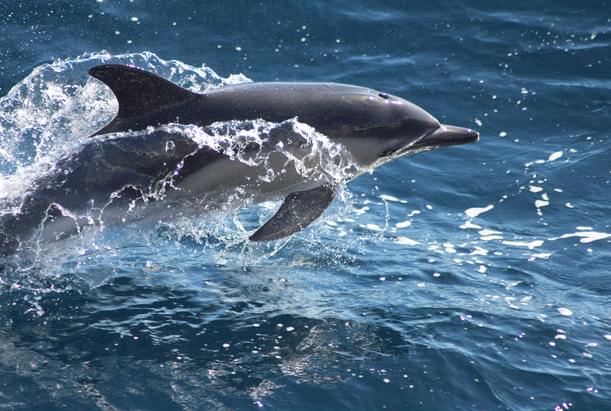
One hour later we were in open water with land out of sight. All around were concentrated flocks of Inca Terns and Peruvian Boobies, when suddenly a group of cetaceans exploded from underneath one of the flocks. They were Dusky Dolphins, leaping in formation to form a split-second natural archway above the waves.
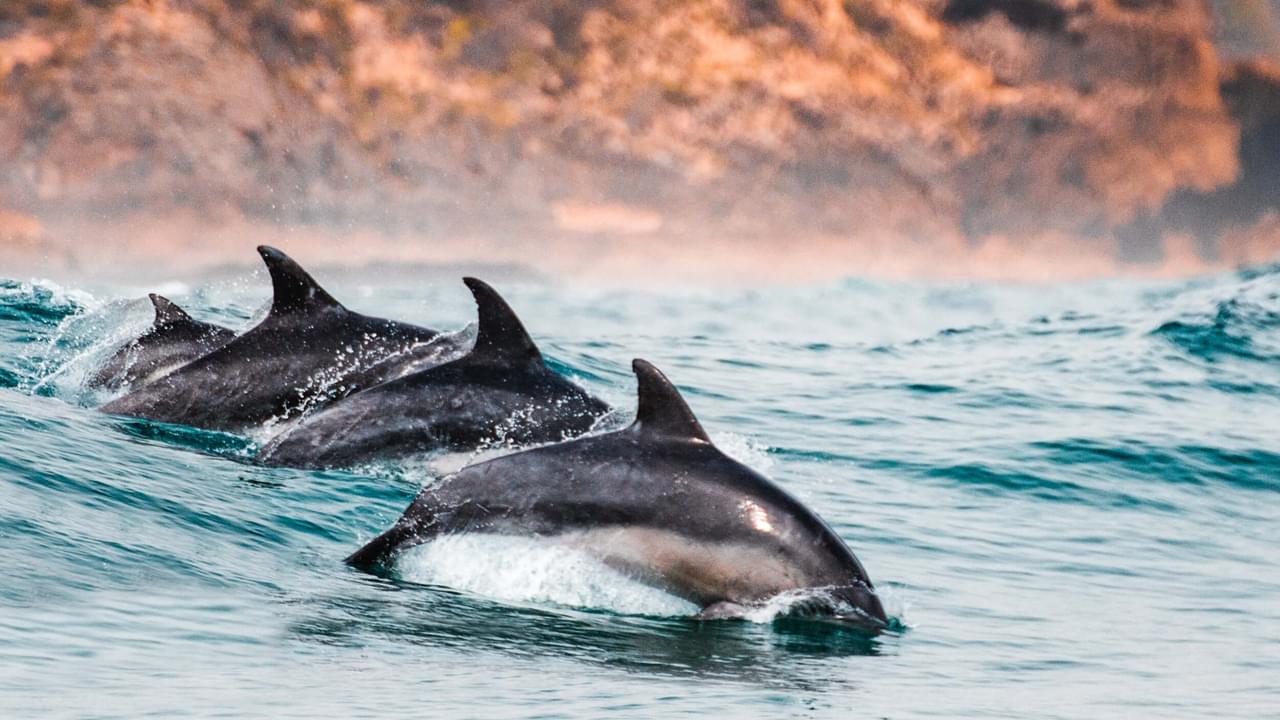
It was a fantastic start, but just half an hour later we were amongst dolphins again. This time two animals chased after the boat, whilst others leapt clear further off. We identified one as a Dusky Dolphin but there also appeared to be Common Dolphins within the group.

After a quiet spell, we arrived at the shelf-break to find ourselves surrounded by seabirds, the density and diversity of which I have rarely seen elsewhere. So as the boat slowed, it was time for some “chumming”. Chumming is a tried-and-tested recipe of rotting fish, oil and popcorn, which is the seabird equivalent of feeding blue tits with a bag of peanuts. Once the fish meal is thrown onto the water, the birds descend from miles around to enjoy the feast.

Chumming

Before long the water was covered in a blanket of seabirds, with large numbers of White-chinned Petrels dominating the scene along with a scattering of Peruvian Booby’s. No less than five species of petrel were fluttering past: Black-bellied, White-vented, Wedge-rumped, Ringed, and Markham’s. Best of all though, and dwarfing the petrels, were two magnificent species of albatross, Waved Albatross, which breeds in the Galapagos Islands, and Salvin’s Albatross, which has sailed all the way from their nesting grounds in New Zealand – what a treat!

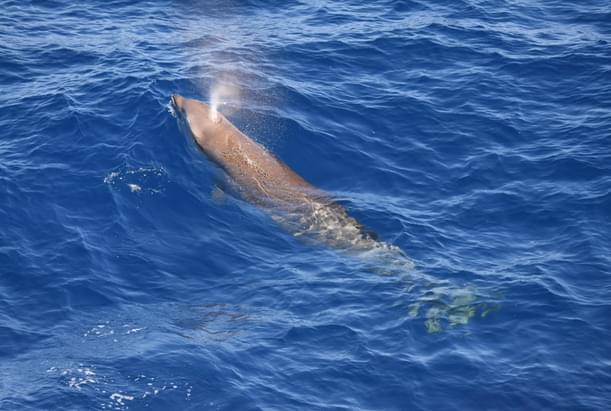
As we turned for home, the weather deteriorated to a sea state four, making cetacean spotting pretty difficult from an eye-height of just three metres above sea level. But just when we least expected it, a dark shape rose in front of us and right next to the boat. It appeared almost black in colour, seemed a little too big to be a dolphin, and had a prominent, triangular dorsal fin. Seconds later it had gone, leaving us open-mouthed and wondering what on earth we had just seen. Most likely it was a beaked whale, we summarised, wondering which of several species almost unknown to science it could have been.

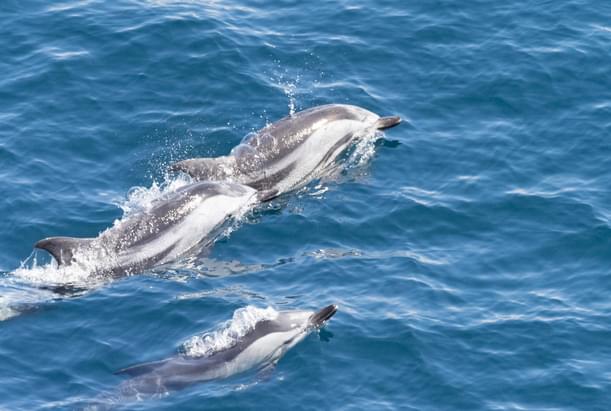
Closer to shore we zig-zagged through flocks of circling seabirds under which we usually discovered the bobbing heads of South American Sea Lions, although on one occasion we found Dusky Dolphins, this time racing past our wake. We also picked up two Swallow-tailed Gulls and a lone Cape Petrel to add to the day’s incredible bird list.

Finally, one hour from port, we passed Palomino Island, home to great colonies of Peruvian Booby’s and South American Sea Lions. Further proof, if it were needed, of the significance of this area for countless seabirds and marine mammals. It provided a fitting end to one of my most memorable days at sea.

I would like to thank Gunnar of Kolibri Expeditions and the friendly boat crew for organising the pelagic and for their help throughout.

Photographs are © Dylan Walker / Breathtakingwhales.com

Kolibri Expeditions
www.kolibriexpeditions.com
E-mail:
for more information

Kolibri Expeditions provides birding trips to all corners of South America. We are based in Lima, Peru. General Director is Gunnar Engblom, a well known tour leader and bird guide.